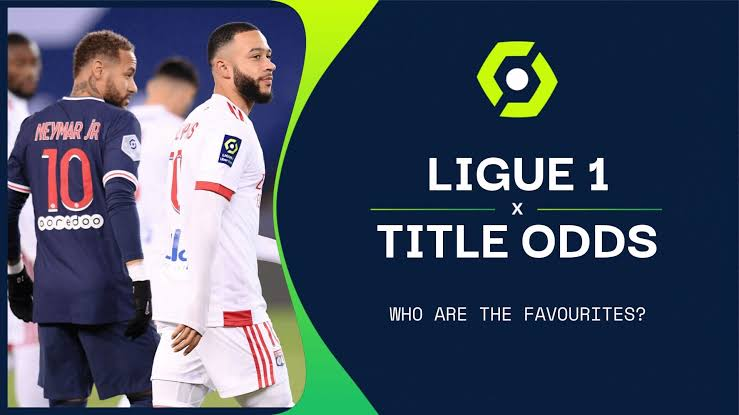
When bettors look back at Ligue 1 2017/2018 and ask which teams “made the most money,” they are not just asking who won the title. They are really asking which clubs, if backed repeatedly at the odds on offer, generated positive returns because bookmeakers and the public underestimated them more often than not.
What “Profitable Team” Really Means In A Season‑Long Betting Lens
A “profitable team” over a season is one that would have produced a net gain if you had bet them systematically at available prices, for instance staking one unit on their win in every game and tracking the result. That profit can come from high win rates at moderate odds, from occasional upsets at long prices, or from markets beyond the basic 1X2, but in every case the cause is the same: the team’s actual performance exceeded the probabilities implied by the odds often enough to overcome the bookmaker margin. In Ligue 1 2017/2018, that did not always line up with the top of the table, because giants like PSG were so heavily favoured that their short prices often left little room for long‑term value despite frequent victories.
How PSG’s Dominance Helped And Hurt Bettors Financially
PSG’s 2017/2018 campaign was dominant in sporting terms: they finished far clear on points, had a huge positive goal difference, and clinched the title with matches to spare. For bettors, this dominance had a double‑edged effect: their high win probability meant backing them often felt safe, but their 1X2 odds were typically so short that a few draws or losses could wipe out the small profits from many winning bets. As a result, PSG’s matches were more likely to have been financially useful through handicaps or totals markets for bettors who judged margins correctly, rather than through blindly backing them to win every week, which rarely qualifies as a “most profitable” strategy over a full season when priced accurately.
Why Some Mid‑Table And “Unfashionable” Teams Often Outperformed Their Prices
Historically, profitability studies across leagues show that mid‑table or lower‑profile teams can be more rewarding to back than the elite, because the market pays less detailed attention to them and sometimes lags behind genuine improvements in performance. In Ligue 1 2017/2018, clubs that combined solid underlying stats with modest reputations—strong home records, tight defeats away to bigger sides, or sustained defensive organisation—would have been candidates for season‑long profit if books consistently offered odds reflecting weaker expectations. Bettors who followed those teams closely could spot where narratives and table position understated their real level, and repeated small edges in these matches often mattered more than rare big hits backing outsiders against PSG.
Mechanism: From Market Neglect To Profitable Underdogs
The mechanism that turned these sides into money‑makers was straightforward. When a mid‑table or lower‑half Ligue 1 team produced results at or above league average while routinely being priced as a clear underdog, backing them or taking them on the handicap produced returns because the actual win/draw rates exceeded the probabilities implied by their odds. For example, a club that was strong at home yet perceived as weak overall might have been offered at generous prices in many home matches; if that team’s home performance remained consistently good, a bettor focusing on its “micro‑form” could build profit from repeated, well‑priced bets that the broader market treated as speculative.
Using Historical Odds Databases To Identify Season‑Long Profitability
To move beyond anecdotes, real bettors used historical results and odds databases to calculate hypothetical returns by team. Sites that archive Ligue 1 2017/2018 match scores, closing odds, and league statistics allow users to simulate strategies like “one unit on every team’s win each match” and then compare profit and loss across clubs. This makes it possible to see which sides would have yielded positive ROI and which would have drained a bankroll, even if both finished close in the table.
Before presenting a structured view of this idea, it is important to stress that these calculations are descriptive, not prescriptive. They tell you which teams were mis‑evaluated in that specific season, not which ones will automatically be profitable in future editions, but they do reveal patterns in how markets treat different types of clubs over time.
| Profitability pattern (by team type) | Typical Ligue 1 2017/18 behaviour | Betting takeaway for that season |
| Elite but fairly priced | High win rate, very short odds | Good for accumulators, rarely top profit single‑team ROI |
| Strong but less hyped European contenders | Consistent results, slightly better odds than PSG | Often solid season‑long ROI if backed selectively |
| Stable, under‑rated mid‑table sides | Good home records, close games vs stronger teams | High potential ROI for bettors spotting mispricing |
| Chaotic relegation candidates | Inconsistent results, frequent heavy defeats | Poor season‑long ROI despite occasional big upsets |
This kind of pattern‑level breakdown shows that the most profitable teams relative to odds were often those sitting between the top and bottom extremes, whose strength exceeded their reputation just enough to generate repeated value without attracting over‑correction in prices.
How Season‑Long “Money Teams” Look From A Value‑Betting Perspective
From a pure value‑betting standpoint, a team becomes a “money team” over a season only when a systematic approach to backing them yields positive expected value. That does not mean they were easy to identify in advance; rather, it means actual closing odds underestimated their performance across enough matches to make simple strategies profitable in hindsight. In Ligue 1 2017/2018, that status likely went to a small subset of clubs whose home form, late‑season motivation, or style produced better results than both bookmakers and casual bettors anticipated.
Real bettors who ended the season in profit rarely did so just because they happened to pick the right club to back blindly. Instead, they constantly updated their judgment of which teams were being mispriced, shifted focus away from sides that had become overvalued after strong runs, and concentrated bets where their assessments diverged most from market probabilities. That process, rather than loyalty to one crest, created the effect of having a small rotating group of “money teams” at different stages of the campaign.
A Practical Checklist For Spotting “Profitable” Teams During A Season
From an odds‑interpretation angle, the most useful question is not “Which team will be most profitable?” but “Which teams currently look mispriced often enough to be worth following?” Experienced Ligue 1 bettors in 2017/2018 tended to use a recurring checklist to evaluate this. The logic was to identify structural features—home strength, consistency, form vs odds movement—rather than to chase hot streaks without context.
The sequence below turns that logic into a repeatable filter. You can apply it at multiple points during a season to decide which clubs deserve special attention because they might be drifting into “profitable” territory relative to closing odds.
- Compare each team’s points per game and goal difference to pre‑season expectations or budget‑based estimates.
- Track how often a side beats the spread or performs better than match odds implied, using historical odds logs.
- Check whether their home or away performances are systematically stronger than their overall market reputation.
- Monitor closing‑line movement: teams consistently backed late by sharp money may be undervalued initially.
- Re‑evaluate after managerial changes, key injuries, or tactical shifts that could change their underlying level.
Teams that score well on several of these criteria over a stretch of Ligue 1 2017/2018 fixtures are more likely to become short‑term “money makers,” especially if the broader market has not fully reacted yet. Those that fail most checks are more likely to produce sporadic wins without true season‑long profitability.
Where A Betting Platform Like UFABET Entered A Real Bettor’s Workflow
Once a bettor had identified a Ligue 1 2017/2018 side that looked promising in terms of season‑long profitability, they still needed an environment to execute and track those bets efficiently. If analysis indicated, for example, that a particular mid‑table club’s home matches were frequently mispriced, the next step involved repeatedly placing structured wagers on that pattern and recording outcomes. Under that framework, using ufabet as a betting platform functioned best when treated as a neutral infrastructure layer for placing and logging Ligue 1 bets, allowing the bettor to stick to their edge—backing that team in specified scenarios at defined stakes—without being drawn into random markets unrelated to the profitability thesis they had built.
How Season‑Long Profitability Can Disappear In A casino online Context
Season‑long “money teams” are highly sensitive to discipline. If a bettor’s winning runs backing certain Ligue 1 2017/2018 clubs were repeatedly diluted by impulsive, unplanned bets on unrelated events, the overall profit would shrink or vanish despite the edge in those specific fixtures. When these football markets exist inside a casino online environment, the risk of distraction increases because slots, tables, and instant games are only a click away. For bettors who genuinely want to capture the value that “profitable teams” offer, the most sustainable approach is to treat the casino layer as separate and restrict their activity to the Ligue 1 plan they built, so returns from those teams are not eroded by higher‑house‑edge games that ignore the same odds‑interpretation logic.
Summary
From a bettor’s viewpoint, the Ligue 1 2017/2018 teams that “made money most often” were not simply the strongest on the pitch, but those whose actual results repeatedly exceeded what their odds implied. Elite sides like PSG dominated the table yet were typically priced so efficiently that they rarely topped season‑long ROI charts, while certain mid‑table or overlooked clubs quietly became “money teams” when their performances outpaced the market’s expectations, especially in specific home or situational contexts. Identifying and exploiting those teams required a value‑driven process—converting odds to probabilities, checking for consistent mispricing, and executing bets with discipline—rather than loyalty to any single badge, and that process remains more important than the particular names involved in any one season.